Recently I attended a AI School Leader Innovative Conference sponsored by Toddle at a local independent school in Los Angeles. Fascinatingly the school presented their 10 year journey to adopt a mastery grading practice schoolwide (k-12) something that I personally appreciate with my given background in this area. Here is my previous post from a few years ago.
Nowadays the practice of Mastery Grading can be simplified with the use of AI- one could upload the course standards, material from the curriculum and ask the system to identify what are the specific skills students should master as a result of studying that particular subject. Imagine what Carnegie would have done with this kind tool. It was in 1906 that the original Carnegie units were implemented to standardize what is expected to earn a high school diploma. The carnegie units were to measure learning and did so in number of hours per/unit. For example, one unit equals about 120 hours of study. The high school transcript has gone unchanged as well:
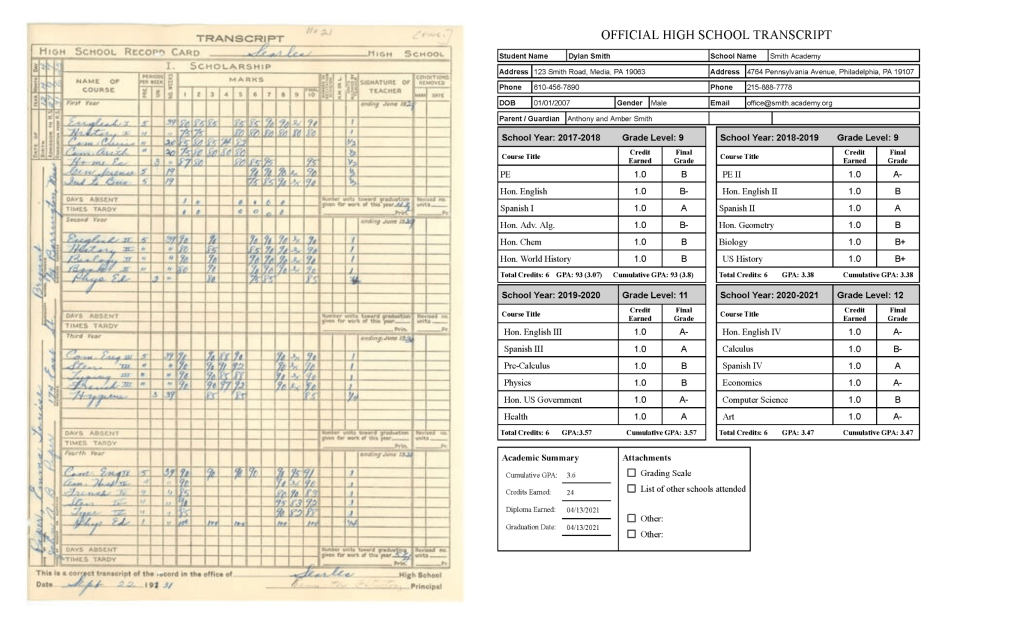
Photo taken from Carnegie Foundation website
Mastery Grading is Not NEW
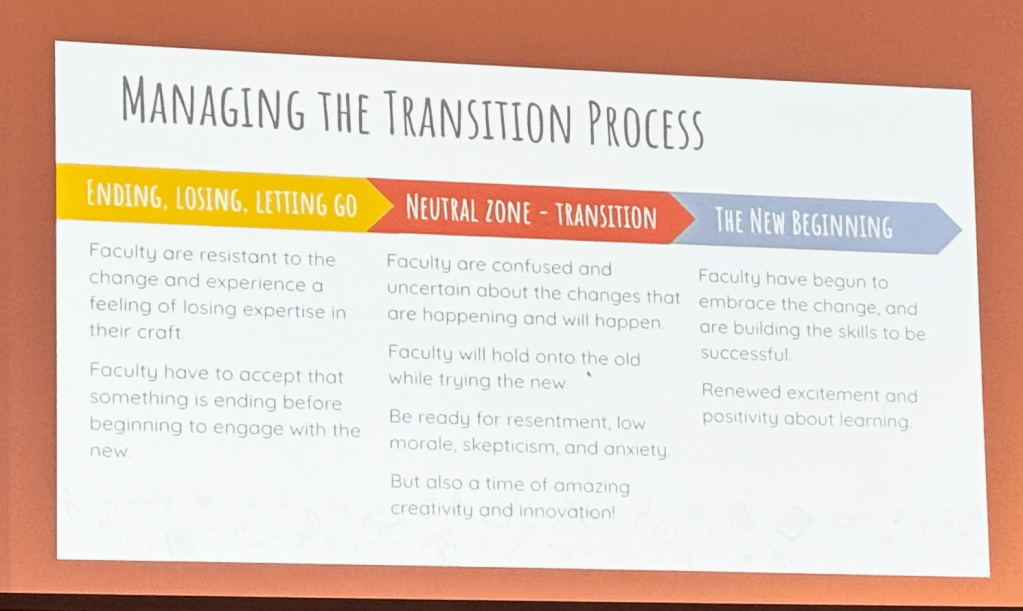
That said from the conference I learned that mastery grading is NOT something a teacher can be successful at implementing in isolation. To benefit students it is best that there be an entire team effort to have clarity of expectations and common understandings towards what is expected. This one school shared in their presentation this slide below that captured how they managed the transition. Using the book, Managing Transitions Making the Most of Change by Susan Bridges (link to website) the staff read this book to ground them with common language and expectations of what change means for them and build collective buy-in to the process. Key is identifying what shall be ended/let go before moving towards a more neutral zone before beginning the new chapter.
For mastery grading it is important to know the WHY before engaging on this pathway. Hence I suppose this is why it took this one school ten years to arrive at the practice.
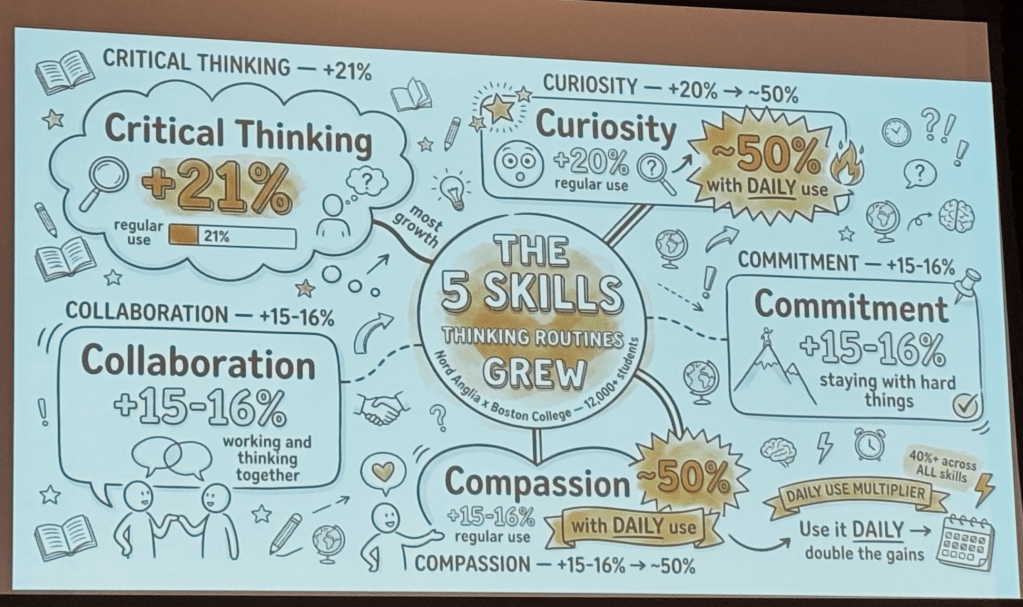
Unfortunately knowing that Mastery grading is more aligned with the modern era and what is required to bridge to the world of work, I believe for our students we as educators can’t wait to make this shift. We have to be rigorous and transparent in what mastery means for our courses and align our lessons that build students’ learning- the focus in our classrooms should be learning and supporting students to engage with curiosity, collaboration, critical thinking, commitment and compassion. This image was shared by @Designing Schools, Dr. Sabba Quidwai in her keynote at the Toddle Los Angeles Conference.
Shifting to Mastery Based Grading is a journey for any institution. Key is to start so that our students do not have to continue in an antiquated learning environment that does not truly prepare them for the future of work and living a fulfilled life. Check out my blog on this transformation process and feel free to reach out with questions, stories and ideas to help us all work together towards improving the schooling experience for ALL learners.
(Note this blog is 100% written without the use of AI- apologizes for any grammar or other errors.)
 Teaching Hacks 4 All