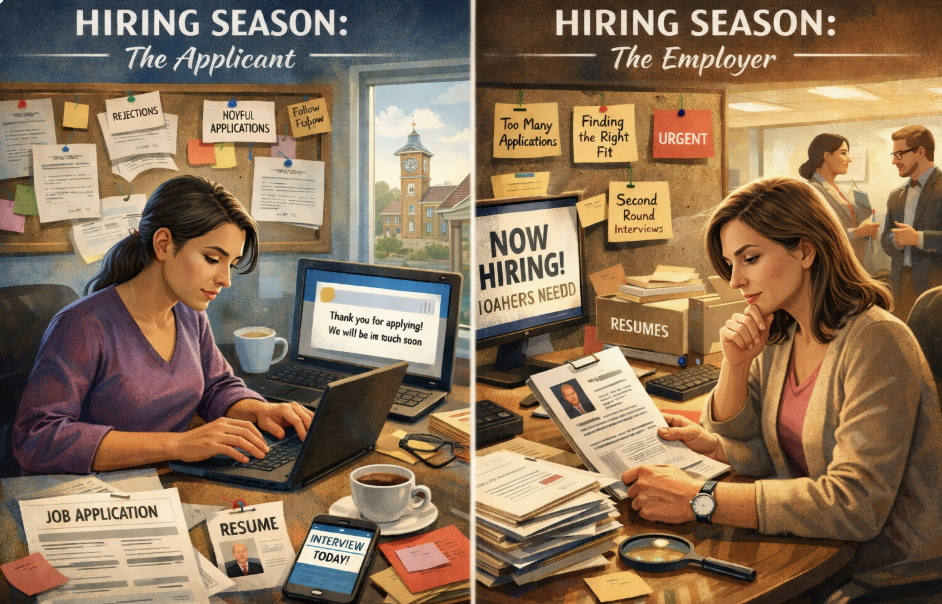
From personal experience I offer this post as both a recent applicant and a recent recruiter/now employer. In education the marketplace is vast and incredibly competitive in most positions for 2026. With the given budget cuts in districts open positions will likely see a surge of applicants compared to the Covid years where money was more prevalent. A couple of years ago I returned to the States after living abroad for several years thinking that with my experience in different settings (public, charter and private), my credentials and passion for education plus a strong network that I should be able to land a position within a few months.
Eighteen months, 300+ applications later with a ten month consultancy gig I landed my dream job. In between I did serve as a recruiter for a charter school CEO position in the South Bronx and was trying to get a new CTE high school launched in Los Angeles. These hands experiences to hire a leader while I too was applying for leadership roles gave me insight to the delicate dance- not too different from dating. Below I will capture some suggestions for applicants and share dos and don’ts for recruiters/employers currently interviewing for positions. My hope is that the journey for others could be smoother and more rewarding.
Applicants:
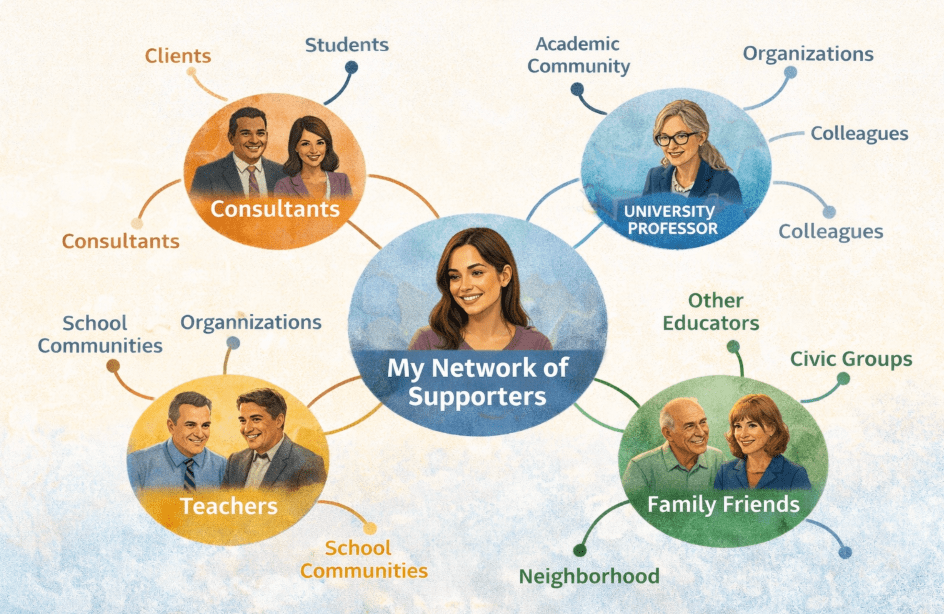
Use your network. With 24 years of experience in Los Angeles and 10 years abroad I tapped everyone I believed to have a connection with at some point in my career- either teachers who taught at my schools, students who now are serving in leadership roles, professors, leader counterparts- the gambit. Each day I would send a few emails, messages on LinkedIn and Facebook to different folks letting them know that I was back and ready to serve k12 education in the public sector with the ambition to make a difference on a K12 school system to improve the learning experience for students. Each conversation was an opportunity for me to become familiar with the landscape and leave an impression so that my network would reach out to their network.
Employers:
Use your network. It is not enough to just post your open positions on EdJoin and Indeed and hope for the best. Consider writing a piece for LinkedIn about your organization and highlight the open positions. When you talk with colleagues in different networking capacity let them know what positions you have available and the qualities of applicants you are looking for. Spread the net far as you are recruiting for an important role. Personally when I recruit I consider who would I want teaching my child- that is the person I must find.
Paperwork Preparation
Applicants:
Resumes and Cover Letters: Use a template for your resume! Make sure all the key information is there and it is ordered with experiences at the top followed by education. As much as possible align your experiences to the jobs you are applying to. ChatGPT can definitely help you with this. Consider uploading a job description and your resume and ask the Chat to revise your resume based on the job description. Similarly for cover letters feel free to use the Chat to draft your cover letter as well aligned to the job description and the organization’s mission and vision statements.
When I was applying to different positions I maintained a single conversation thread on Chat to keep my information current and updated. The system was able to access different content and adjust accordingly and it made it easier to track my submissions. I also maintained a spreadsheet of my applications with the date of submission, follow up, and next steps. Here too I added any specific notes I collected with regards to my insights about an organization- things I liked, things I had questions about….
For completing tasks I liked to use Google LM. Each organization would have its own folder on my LM system. In it I would upload the task, information about the organization, key people and more and then use a series of prompts to help me organize my response. Always proof read and personalize; the system creates a good start. In the end you need to know the information for your interview.
Employers:
Job Description, Email Correspondence, Calendar Invites….: Most often job descriptions have been written by the HR department and approved both the Board before they are posted. Be sure to familiarize yourself with them and have ready a tracking tool for how you review applications. Several organizations have a system in place i.e. via EdJoin, LinkedIn or maybe Bamboo. Regardless it is important to know the system and control the communication that occurs when an application comes in.
For example when I as running the CEO position as a consultant I received applicants via LinkedIn and Edjoin. I had everyone apply via EdJoin so that the hiring committee was able to track the applicants. This required that I communicate to all applicants, reviewing that they met the criteria and if they did encourage them to go the next step via EdJoin. Then I scheduled phone interviews using Calendly to reduce the emails back and forth and maintained a spreadsheet for my notes to share with the hiring committee. The committee reviewed the files and notes and directed me as to who to schedule for interviews and when. In my communication with candidates I owned that I am representing the organization and that it was important the candidates felt good after our conversations. (In full disclosure I now know how difficult it is to keep a schedule with recruitment when it is not my 100% job anymore- so I am most apologetic to applicants for whom I had to reschedule several times due to conflicts on my calendar.)
Applicants: Interview
Employer- Interview Set Up
Prep and beyond: In an interview applicants are at the mercy of the designed interview process. Most times it sucks. On occasion one is able to see the alignment between what the org prioritizes and the interview process. Usually the best part of the interview is meeting the different stakeholders and learning from them what they enjoy about the org and is there one thing they would like to improve.
Regardless of the process it is important to prepare- first impressions matter followed by prepping for the assigned tasks, researching the organization and know the key players in the organization- do some LinkedIn/Google search. Prepare like you are representing yourself in court or for a audition.
Recently in the interviews I have held as an employer I have been surprised by how candidates have not prepared- either in how the dress for the interview or their understanding of our organization. Also I appreciate when candidates have been thoughtful about the questions they have- in education we need thinkers who are teaching our students and leading our schools.
Always follow up any correspondence with appreciations and confirmation of the different tasks assigned. If you receive an initial rejection- that is okay, it just means that the org is not right for you and does not deserve your talent. Respond back with a thank you, note it on your spreadsheet and continue applying elsewhere.
Keep your network/mentors updated with new applications and new leads. Remember you are just one entity to them and that they too are juggling.
Control with Respect and Execute with Joy: in modern day internet searches it seems we have not moved forward in our interview process- too many educational settings require candidates to go through lots of hurdles as part of the process. Ultimately there are three questions we need to know with one given assumption:
- Assumption: Applicants can do the job they applied for-this would be determined in the initial screening.
- Question 1: How do you know this person can really do this job?
- The candidate is already qualified- they need to know what is really the job and do we believe they can do it- that is what you are assessing. In the interview tell the candidate about the position, the organization and bigger goals.
- Question 2: Why do you think you are qualified for this position? Why are you interested in this position?
- Question 3: A conversation to determine if one can with the applicant- looking for red flags and determine if they want to work with you.
For the interview/task itself consider what is needed to determine the questions above. Personally I do appreciate a demonstration to see how candidates approach a given challenge/ task and how they receive feedback. When designing a task I am also mindful of time- it should not take a candidate more than an hour to prepare and it should be less than 20 minutes in execution during the interview process. If one has an effective pre-screening phone call than it would only be final candidates coming in for an interview. Investing in the pre-screening saves everyone lots of time. Also it means that the hiring committee is less fatigued and could feel a certain lightness or joy in the process instead of what I often faced in my rounds of interviews- glassy eyes and boredom by the committee members.
Final suggestions:
Applicants– have a mentor cheerleader in your court. For me this role was shared by several different people who knew me at different points in my career. In all cases I restored connection after a 20 year hiatus to help me secure a position. It is crucial to stay positive and keep doors open- very much like finding a mate looking for a position in education requires the extra steps and is very relationship based.
Employers– think critically about your processes and value the applicants’ time. Given that they are applying for your open positions be realistic in the tasks you assigned and make them feel valued. Personally when I was asked to come up with a 3 month and year long strategic plan for a school I felt that this is an impossible task because for it to have merit one would have to know the school environment. Instead I appreciated my current organization’s approach which was to share a PD on a topic of MY choice and could be one that I had already used in the past. This process allowed for the committee to see a bit of my toolbox and my delivery skills in leading professional development- something aligned to the work I now do.
Also employers/recruiters consider the first impressions you are leaving on candidates. They too will be future spokespersons for your organization. In my process I appreciated the conversations I had with different entities about their thoughts and future roles that may surface; I did not appreciate being ghosted or asked to meet for a 15 minute interview in a restaurant with a CEO or assigned tasks that took a lot of time and were not relevant. Also the one-way interview platforms leave candidates feeling empty and not heard. It is key that candidates feel valued and respected.
Feel free to reach out with any questions and feel free to share your own ideas. 2026 hiring season is upon us and I do hope everyone in search of finds their next fulfilling chapter.
 Teaching Hacks 4 All